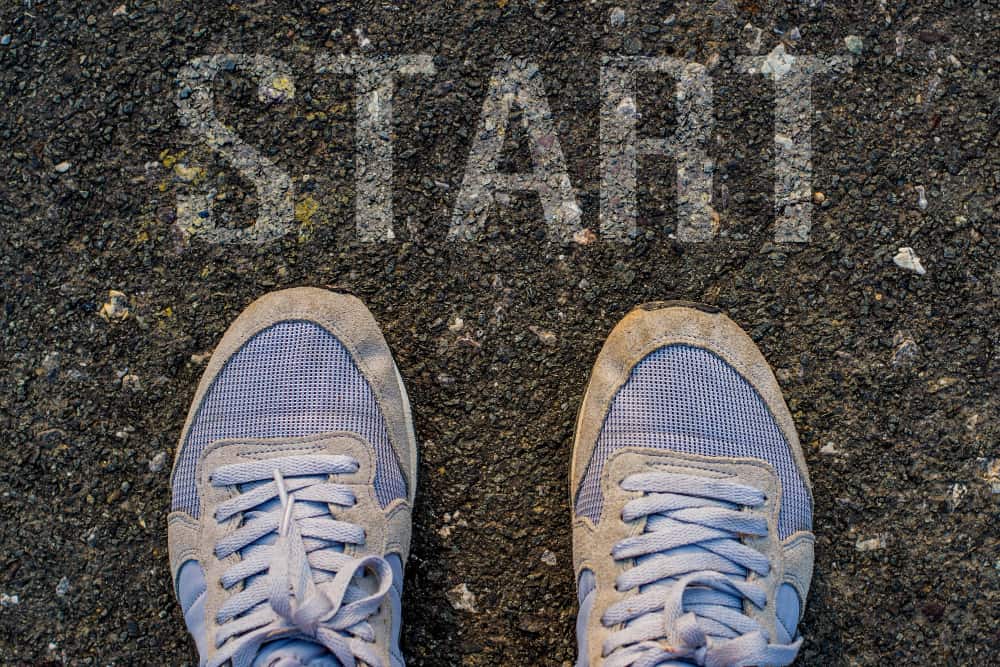
Stress drinking. When does casual drinking become a problem?

Stress Drinking

Alcohol consumption is a prevalent challenge we face today. But is your drinking just social or is it stress drinking? And what is the impact of stress drinking?

The scale of stress drinking and its consequences is staggering. The World Health Organization reported that more than 3 million people died because of the harmful use of alcohol in 2016 (think disease, accidents, violence). For perspective, COVID killed just under 7 million people in 3.25 years…alcohol kills upwards of 3 million in a single year.

But back to you. You are wise to be thinking about the type of drinking you do. For the sake of your physical and mental health, your relationships, family, work, and livelihood. Even if your drinking is not a problem right now, participating in frequent drinking or occasional binge drinking can put your future at risk.

The warning signs are there

You drink a bit, sometimes a lot, but you could go without it if you had to. You enjoy a nice glass of red or a beer with mates, and you will happily pop the bubbly for a special occasion. Surely, there isn’t a problem with that?

I agree that’s not a problem. The problem is how strong it can be – the urge to have a drink. Sometimes it’s hard to stop at one or two. It’s tempting to have one to take the edge off after a rough day or to help ease you into a good night’s rest.

The problem is when we use alcohol. When we use it the way we use other analgesic drugs. But instead of using it for headaches or lower back pain, we use it to ease tension, lift our mood, and numb the day away. In other words, we use it sometimes to regulate our stress levels.

The risk of stress drinking is real

You might be right that your, your friend’s, or your partner’s drinking is not an issue. However, it is very easy to become a problem. Not only are there increased health risks, but there is a risk that your casual drinking can quickly turn to stress drinking which then can become a struggle.

National Institute on Alcohol Abuse and Alcoholism: Low Risk Assessment

  • For woman, you are considered low risk if you do not consume more than 3 standard drinks on any single day, and no more than 7 standard drinks per week.
    (An average bottle of wine is 8 standard drinks.)
  • For men, you are considered low risk if you do not consume more than 4 standard drinks on any single day, and no more than 14 standard drinks per week.
    (4 beers at the pub and a bottle of wine are more than 14 standard drinks.)

If you stick within these limits the NIAAA (National Institute on Alcohol Abuse and Alcoholism in the US) suggests you are low risk of developing an alcohol use disorder.

Note: The strength of alcoholic beverages varies, the effect of alcohol on an individual varies depending on body weight, and even what is considered a standard drink varies in different countries. So yes, these measures are not universally applicable.

Do you ever look around the room and wonder about how high the rates of divorce are, or how prevalent cancer is – and wonder whether it will be you? Of course, we all wonder. But why don’t we wonder if we will lose control of our stress-drinking habits?

The old friend whom everyone knows drinks too much, the neighbour who always looks ill, the hassled parent who’s always getting the kids to school late, your coworker for whom stress and sleeplessness is a way of life-the casual drink wasn’t a problem for them either until it was.

And they’re no different from you and me. It’s not because they had an alcoholic parent, or because they have a history of depression, or because they’re weak or have an ‘addictive personality’. It’s just not that simple.

We all know of someone who held it together for so long. Through the shock of the diagnosis, the disruption of life and discomfort. The drinking crept up on them, and it’s just so hard to cut back even though they’ve been given the all-clear now.

Why we’re at risk of stress drinking

I reckon there are two key risk factors. This is why stress drinking can be your problem. They are social and stress factors.

First, let’s be frank, drinking is an undeniable foundation of social life for most of us. It’s everywhere, all the time. It’s not just acceptable or normal to drink, it’s almost expected in most social circles.

Second, stress is unavoidable. You will encounter stress to varying degrees throughout your life. The combination of these two facts puts us at risk.

Because drinking is a part of life, it is too easy to use it when that inevitable stressful time occurs. So, while you have a handle on your drinking now, you can’t know for sure that it won’t become a struggle.

Don’t stop drinking

I’m not so foolish as to suggest that you quit drinking. I know that would be un-Australian of me and understandably unwanted advice. I’ll leave that to the very Australian, former test rugby-playing, quintessential Aussie Bloke, Peter Fitzsimons. He is pretty convincing – he explains that he lost 34kg and notes that a bottle of wine has the same number of calories as a Big Mac!

He understands now, having quit, about having a better mood, improved sleep and thinking more clearly. He also understands that while it might be a “better night” with booze, it’s a better life without it.

He didn’t want to rely on willpower. He felt he knew that if he had just one, why not two, and so on. If all that resonates for you, maybe you want to think about giving it away altogether.

Otherwise, don’t stop drinking but do be aware of the risks. Be conscious of how you use it, and, how you use it in the context of stress.

Top 3 tips for enjoying alcohol and avoiding stress drinking

Measure up

Simple but effective. Count your drinks, measure your alcohol, and keep track of your consumption. You’ll be surprised how this reduces your intake almost without trying.

Rule your world

Make life easier for yourself by choosing the rules of drinking by which you wish to abide. Never more than two a day? A minimum of two alcohol-free days a week? Not on a school night? Don’t open a bottle on your own? You make the rules for yourself and stick to them.

Have your party line ready

Have an explanation up your sleeve. When you’re not joining in with the amount that others are drinking, people will be ready to think you are being antisocial, strange, or judgmental. Pick your line and use it liberally. ‘I’m on a health kick’ , ‘I need to be on the ball tomorrow’, or just, ‘I’m cutting back and feel good for it.’

In closing, I’m not telling you not to drink, I am suggesting you be conscious of slipping into stress drinking habits and to notice when and how you use alcohol.

Getting Started with Therapy Sessions: Your Top 7 Questions Answered

therapy sessions

7 things to know when booking your first therapy sessions

Are you thinking about booking counselling or therapy sessions for the first time?

We understand that it can be daunting… Which therapist should you choose? What should you expect from your therapy sessions? And will I actually feel better?

I have collated the most common questions people ask when they’re new to therapy (regardless of the triggers that bring people to counselling).

Note: We use the terms “Counselling” and “Therapy” interchangeably in Australia.

1. Can therapy sessions help if I don’t know what the problem is?

Some people come to their counselling sessions ready to articulate their struggles in detail. But they are the minority.

Some can point to a symptom or destructive behaviour:
“I’m stressed, and I can’t sleep.”
“I’m drinking more than usual.”
“I’m always snapping at my partner.”
But they can’t really explain it.

And for others it is even more intangible:
“I don’t know, I just don’t feel myself, things are fine, but I don’t feel fine.”

You do not need to know what the problem is or how to describe it. “Finding” the problem is part of the counselling process, and it is part of a therapist’s job to facilitate this process.

If you cannot name or explain your difficulties, you are not alone. Don’t let not knowing stop you — a good therapist can help you find the words.

2. What if my life is good already?

Does your life from the outside look good? Are you considered lucky?

Many people denigrate their pain, calling it ‘first world problems’. So, they suck it up or tough it out because they find it hard to believe that they need or deserve help.

However, if they had pain in a leg that caused them to limp, they would not hesitate to get medical attention. And if it was a friend struggling, they would encourage them to get help.
It can be a destructive double standard because pain and discomfort caused by stress, depression, anxiety, loss, trauma, or any other mental health issue are real and deserve attention. A good life does not mean you ought to struggle alone with stress and strain.

3. Where do I start with therapy?

therapy sessions

Some people know exactly where they want to start in their first therapy session. They have thought about what they want to say. However, most people come to counselling sessions with nerves and vague ideas only. Either way is fine, we start where you are at.

Every first session is unique. You may have a question for your therapist. Your therapist will have questions for you. Perhaps you will outline your current life circumstances. You might describe how you are experiencing stress, how it is impacting daily life. Some family history may help you get started.

Your counsellor will assist you if you are feeling uncertain. They will have gentle prompts ready to help you get started, and to work with you to find an approach that eases you into counselling.

4. How do I choose a new therapist? What if don’t like them?

Be sure to see a therapist who is qualified, professional, and has the skill to meet your needs. Ask about their training and expertise, the clients they see, and the issues they assist with.

Also ask how they work. For example, in our therapy sessions at JS&A, we explain beforehand that we want to understand your personal history. We will ask about your past relationships, childhood, and family history. People who do not want to discuss the past will know that our service is not a good fit for them.

Most professionals in this field are respectful and thoughtful — you should expect this as a minimum. Get a feel for the counsellor from their website or directory profile, or whoever referred you, and from your exchanges with them on the phone or via email. If you have doubts, address them, or find someone else.

· You do not want a therapist who talks about their own personal life.
· You do not want someone who is nice and wants only to comfort you or cheer you up.
· You do want a therapist who can ask you difficult questions where appropriate, and who is thoughtful about your answers.

It is okay and likely that you will feel uncomfortable at times — unless you and your counsellor are avoiding uncomfortable topics, which of course is counterproductive.

Some discomfort is usually necessary to do good work, but it is critical for your therapist to strive to make you feel safe. Your therapist must demonstrate to you that they are capable of responding constructively to whatever discomfort or strong emotion you may experience in your therapy sessions.

It is important that you can raise concerns with your counsellor. They ought to offer a considered, helpful response. A defensive, evasive, or dismissive reaction is a red flag.

Your therapist need not be a person with whom you imagine enjoying a coffee or a beer. They do not need to be friend material! It’s good to find your therapist genuine, however strict professional boundaries are of utmost importance.

5. How do I know if I can do therapy?

It is normal to feel nervous about coming to see a therapist for the first time, or the first few times. It is like trying anything new. Although, let’s face it, nerves may be worse with therapy; talking about your personal challenges with a stranger, even a professional, requires a level of vulnerability and trust.

I don’t know why, but many clients seem to think that they should know how to do therapy. They worry that they won’t know what to do, or that they will get it wrong.

Rest assured that there is no ‘right way’. And a good counsellor is trained and ready to assist you with the process.

· Some people are ready to tell their story, some need their counsellor to prompt them with questions.
· Some people struggle to feel or show emotion, others struggle to contain their emotions.
· Some people find it easy to use therapy to make sense of their difficulties, to find relief or make the change they want, while others need time and support to find their feet in the therapeutic process.

Counselling is a process not a skill. It may be difficult, even painful. But if you have come this far in your investigation into getting help, you deserve it, and you can do it!

6. How many therapy sessions do I need?

therapy sessions

You could say, “how long is a piece of string?” But when you are thinking about counselling and therapy, how many sessions is a fair question, so here are some pointers.

For therapy in our Sydney office, we suggest that people come along for four to six sessions to begin. During this time, we gain some understanding of one another and the challenges you face. Expect positive outcomes from these sessions: a measure of relief, insight and/or direction.

Some people decide these sessions are enough for now. Others want more significant change in their lives and the way they feel and function.

You might commit to weekly counselling for several weeks up to a few months while you address anxiety arising from a promotion or a specific relationship issue. Maybe you find that a year of help sees you through a life crisis or a period of grieving.

Or you may decide to embark on longer-term therapy to address life-long challenges, troubling relationships, or behavioural patterns. Trauma or loss in childhood (or growing up with caregivers suffering from these) affects your development and personality and leaves you at greater risk of mental health challenges in adulthood.

Like healing and rehabilitation after serious injury, learning a new language, or mastering a new skill, therapy will take time — depending on what you wish to achieve.

7. Will therapy work for me?

Some people begin to feel better as soon as they’ve booked a therapy appointment! In the face of struggle, you tend to feel relief from taking positive action.

Swift relief also comes when you vent and let off steam or talk about your difficulty and have a cry. Likewise, you feel better when a professional understands you or helps you make sense of your experience.

But just as there is pain, sweat and soreness on the path to fitness, there are side effects to therapy. Facing old hurts, confronting the realities of an unhealthy relationship or work situation, exploring stress, anxiety and depression, are often accompanied by painful thoughts, feelings and some fatigue.

Yet after a challenging fitness workout, most people are glad they did it, even if they feel tired and sore afterwards — so too with therapy sessions.

Counselling and therapy sessions work in different ways for different people. And you will respond differently to various types of help and practitioners, hence the importance of seeking out what is best for you.

A good experience of counselling can bring comfort, perspective, and positive change. For some people the outcome is concrete: you can finally make a decision that you’ve been putting off, or you sleep better.

For others, it is less tangible but significant. You gain understanding and self-awareness and become less reactive and more intentional in your behaviours and choices. You overcome fears and shift dark moods; or you work through anger, sadness and confusion; and in time, gain an increase in calm and contentment.

Feel the doubt and go for it anyway

therapy sessions

The truth is, of course, it is reasonable to have doubts — as with trying anything new: a job, a relationship, a place to live. You research as best you can, you make informed choices, and you take a punt. It’s worth giving it a go, to seek the help you deserve.

I hope this answers your questions about counselling and therapy. I hope it equips you with greater confidence to take the next step.

Now you can take steps towards getting some help, relief, and direction.

If you are reading this from Sydney, we are based in the CBD and would love to work with you, please contact us for therapy in Sydney when you are ready.

If you are reading this from anywhere else in the world we wish you a fruitful therapy journey and hope you get the support, healing and peace that you deserve.

Mindfulness Tip: How To Be Calm

I originally wrote and published this blog for Tiny Buddah. You can find the original post here.

“I vow to let go of all worries and anxiety in order to be light and free.” -Thich Nhat Hanh

This particular week, I flunked. I’d be lucky if you gave me a D grade in assessing my calmness.

Generally, nobody can question my commitment to leading a life of less stress. I try hard. I try very hard.

You might even be impressed with my healthy diet, my abundance of sleep, and my regular exercise. You couldn’t fault the careful thought and planning that go into my days and weeks. Hell, I can even claim meditation, mindfulness, and self-awareness as long-time, well-practiced skills.

But some weeks you take your eye off the ball, don’t you.

And I can’t blame any common stressors that predictably make life tougher: no illness or injury, no family or relationship stress, no extra pressure at work or excessive financial strain.

That particular week I failed because I didn’t stop. I didn’t let go. Too much rushing, too much on my mind, too much scheduled.

And of course I was on edge, with that irksome and uneasy agitation that plagues you when stress gets the better of you.

It feels unshakeable, lurks about robbing you of simple pleasures, sapping any joy from your day. Left unchecked it will escalate. We all know that stress may pass with little consequence, but let it go and go, and it mutates, into depression, anxiety, or destructive behaviors, ruining work, relationships or your health.

Despite working hard over the years to build my repertoire of tricks and techniques to restore calm, on this occasion it was more luck than effort that turned things around for me.

The surprising antidote arrived on the Saturday afternoon.

Unplanned, Unexpected Calm (and How It Happens)

be calm

“Tilt your head forward so that you’re looking down,” Claire instructed, and boy, did it feel weird. “Yes, it will feel strange, as though you’re swimming downward,” she went on.

Ugh. What was I doing here? And why?

Well, I had signed up my husband and I for a swimming instruction session—determined to choose a shared experience that he’d enjoy for his birthday rather than buying more stuff.

But here I was near the end of a hectic week, with a very full head, stacks of unattended emails, and loads of washing to do. The swimming thing had seemed like a good idea at the time and I knew he’d love it, but maybe I could have skipped it, got some jobs done, and joined him afterward for dinner.

Then it happened.

Claire again: “Swim a short distance that you can manage without a breath, go as slow as you can, and try to minimize any splash. How does it feel, what do you notice?”

I noticed I was beginning to feel better!

She had my attention now, and with each instruction, she dragged me out of my head (with all of its worries and preoccupations) and into my body, full of new muscle, body-position and watery sensations.

I let go and resigned myself to the present moment. And why not? The emails and washing were out of reach and my work worries would still be there when I got back to my desk. Anyway, in order to follow Claire’s instructions, I had to tune in!

I had to listen and interpret her words with my body and my movements.

Claire is a Total Immersion swimming coach, and this method of swimming is all about slowing down at first to improve the accuracy of your stroke: to get balance and movement right, in order that you maximize propulsion and minimize drag. It’s very mindful. It requires that you commit to the present moment and focus inward.

Calm was upon me, hooray.

Take a romantic view, and envisage the sensory experience of the cool and quiet of the water, the slow and rhythmic movements of the body. Or the simple science of it: the activity required me to engage my pre-frontal cortex, thus redressing the dominance of the stress-fuelled, and stress-fuelling, limbic system.

Your Way is the Best Way

The swim session reminded me of a lesson I’ve learned before, my pursuit of mindfulness and meditation. Many years ago after the traumatic loss of a loved one, I survived on yoga and walks on the beach.

Even earlier in life, during anxious exam periods, I had a taste of it when I got some physical and mental relief from dancing around my room and singing along to Thelma Houston and The Pressure Cookers’ “I Got the Music in Me.”

Some of my friends are also devotees of yoga and meditation, but many of them aren’t. They have their own way of getting out of their heads and into their bodies. Out of the angry memory trap of yesterday’s argument with the boss, or out of the anxiety-ridden imaginings of tomorrow’s tense family gathering.

They find their way into the present moment and into their bodies via all sorts of sometimes forgotten, yet always relished activities, like surfing, guitar-playing, gardening, painting, baking.

They rediscover and commit to these cherished activities, and learn as I did again in my swimming lesson, that they rebuild your depleted stores of calm and stop the ravages of stress.

What is your calm-restoring activity? When was the last time you did it? Or is it time to take up something new?

(It ought to go without saying that escapist distractions, like the game you play on your phone on the way home, don’t cut—they do nothing to bring you into the present, or into your body!)

I’m certain you want more calm in your life, and I could give you a long, long list of ways to achieve it. But the simplest and best way to begin is to find your own way and commit to it. But beware.

The trick to getting started on the path to more calm.

Finding your way, your chosen activity, is not hard. Making it happen is harder. You must stop. You must stop and let go. Certainly, when I get it wrong, that’s where I go wrong—I don’t stop.

You won’t find the time for it; you must make the time for it. Thank goodness I booked that swim session weeks before.

You must stop and give yourself permission to let go of your troubles, even just for a short while.

It won’t solve your problems, but it will, in the very least, ground you and let you feel better. And it will likely leave you better equipped to deal with your challenges.

By all means develop your meditation skills and practice. But the simplest way to get more calm right away is to choose your calm-restoring activity, and make a time for it. That’s the trick.

Calm will happen.

When you struggle to get out of your head and let go of all that’s in there nagging at you, your activity is the way to go. And this easy indirect way of letting go is, happily, habit forming.

You will get better and better at stopping. Better and better at returning to the present moment. Better and better at restoring calm.

Thich Nhat Hanh said: I vow to let go of all worries and anxiety in order to be light and free.

Hear, hear. I am renewing my vow to let go of all worries and anxiety in order to be light and free. I will do my best. And to that end, and especially when I struggle, I will make time for swimming, journaling for healing, doing yoga, or whatever it may be that will bring more calm.

How about you?